











When it comes to customising t-shirts, mugs, jerseys, or promotional items, two of the most popular methods are Sublimation Printing vs Heat Transfer. At first glance, they might look similar—both use heat, and both create colourful designs—but the technology behind them is very different. Sublimation actually infuses the ink into the material, while Heat Transfer places the design on top of the surface.
The biggest difference between sublimation and heat transfer lies in how each method works and the types of materials for which they’re suitable. Sublimation transforms ink into gas and embeds it directly into polyester fabric, creating bright, long-lasting prints without adding any extra layer. Heat transfer, on the other hand, applies the design directly to the fabric using transfer paper. This method works on a wider variety of materials—especially cotton—but the print may feel like an added layer and generally isn’t as durable.
If you’re unsure which option is right for your next project or business, don’t worry. In this guide, we’ll break down the key differences between sublimation and heat transfer to help you choose the method that best fits your needs. Keep reading to learn more about Sublimation vs. Heat Transfer for beginners!
Understanding Sublimation Printing
Sublimation printing uses heat and pressure to turn special ink into a gas, allowing it to bond directly with the surface of the material. Because the ink actually becomes part of the fabric or substrate, this method creates long-lasting, high-quality prints that blend seamlessly with the material. However, sublimation is somewhat particular about the types of surfaces it works on.
Polyester fabrics or items with a polymer coating are the ideal match. This is because the sublimation process requires materials that can handle high temperatures and form a strong bond with sublimation inks.
One of the biggest advantages of sublimation is its exceptional durability. The prints are vivid, sharp, and resistant to fading, cracking, or peeling—even after repeated use or washing. That’s why sublimation is often used for products like sportswear, personalised mugs, and other items that face frequent wear and tear.
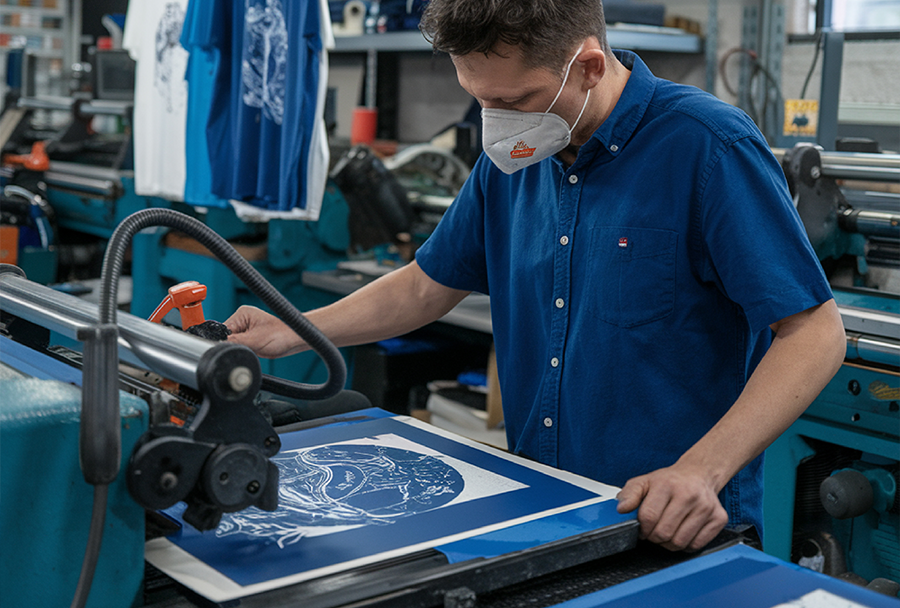
What You Need for Sublimation Printing
To get started, you’ll need a few essential tools:
- A sublimation printer or a compatible inkjet printer converted for sublimation inks.
Sublimation inks are specially formulated to transform from solid to gas without becoming liquid, ensuring smooth, accurate transfers.
Not all inkjet printers support sublimation, so always check your model or consider investing in a dedicated sublimation printer if you plan to use this method regularly. - A heat press machine provides the heat and pressure needed to complete the sublimation process. While the initial cost may be higher than some other printing methods, the professional and durable results make it worth the investment.
Pros of Sublimation Printing
- Produces full-colour, high-definition prints that resist fading and cracking.
- Extremely durable, often lasting longer than the fabric or item itself.
- Creates a smooth, soft finish with no raised surface; the print becomes part of the material.
Cons of Sublimation Printing
- Limited to polyester fabrics or products with a poly-coated surface.
- Works best on light-coloured (preferably white) substrates; prints don’t show well on dark materials.
- Fine details and edges may not be as sharp as those created with some other heat transfer methods.
Best Used For
Sublimation is ideal for full-colour designs on light-coloured polyester fabrics and for hard goods with a polymer coating. It’s a popular choice for creating vibrant, long-lasting prints on a wide range of products.

Understanding Sublimation Printing
Sublimation printing uses heat and pressure to turn special ink into a gas, allowing it to bond directly with the surface of the material. Because the ink actually becomes part of the fabric or substrate, this method creates long-lasting, high-quality prints that blend seamlessly with the material. However, sublimation is somewhat particular about the types of surfaces it works on.
Polyester fabrics or items with a polymer coating are the ideal match. This is because the sublimation process requires materials that can handle high temperatures and form a strong bond with sublimation inks.
One of the biggest advantages of sublimation is its exceptional durability. The prints are vivid, sharp, and resistant to fading, cracking, or peeling—even after repeated use or washing. That’s why sublimation is often used for products like sportswear, personalised mugs, and other items that face frequent wear and tear.
What You Need for Sublimation Printing
To get started, you’ll need a few essential tools:
- A sublimation printer or a compatible inkjet printer converted for sublimation inks.
Sublimation inks are specially formulated to transform from solid to gas without becoming liquid, ensuring smooth, accurate transfers.
Not all inkjet printers support sublimation, so always check your model or consider investing in a dedicated sublimation printer if you plan to use this method regularly. - A heat press machine provides the heat and pressure needed to complete the sublimation process. While the initial cost may be higher than some other printing methods, the professional and durable results make it worth the investment.
Pros of Sublimation Printing
- Produces full-colour, high-definition prints that resist fading and cracking.
- Extremely durable, often lasting longer than the fabric or item itself.
- Creates a smooth, soft finish with no raised surface; the print becomes part of the material.
Cons of Sublimation Printing
- Limited to polyester fabrics or products with a poly-coated surface.
- Works best on light-coloured (preferably white) substrates; prints don’t show well on dark materials.
- Fine details and edges may not be as sharp as those created with some other heat transfer methods.
Best Used For
Sublimation is ideal for full-colour designs on light-coloured polyester fabrics and for hard goods with a polymer coating. It’s a popular choice for creating vibrant, long-lasting prints on a wide range of products.
Understanding Heat Transfer Printing
Heat transfer printing, as the name suggests, involves transferring a printed design onto a surface using heat transfer paper. The basic steps are similar to sublimation: you print your design in reverse onto the transfer paper, place it face-down on the shirt, and then use heat to apply it.
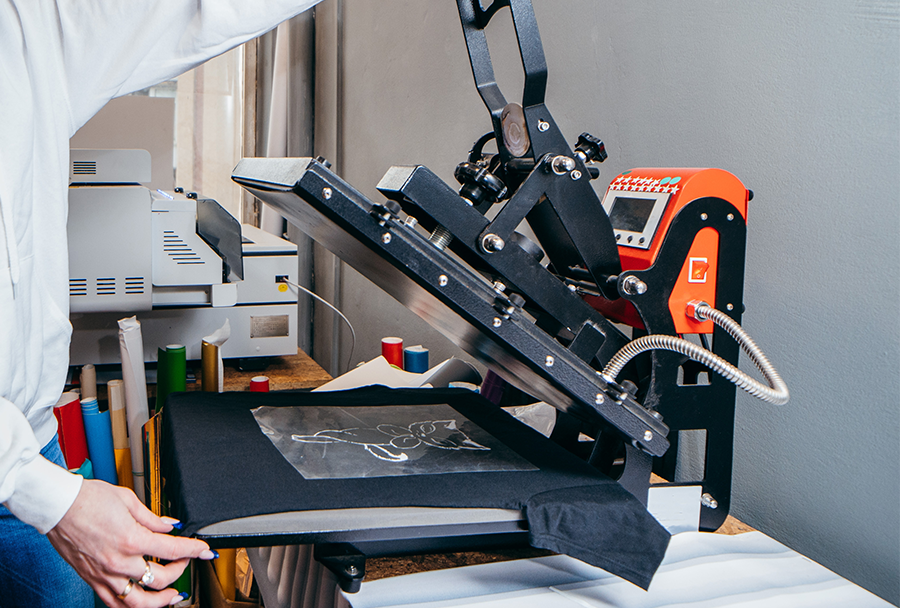
Heat transfer is a highly flexible technique that uses a combination of heat and pressure to move a design from one medium—such as paper, vinyl, or film—onto the final product. A heat press machine is typically used to apply the proper temperature and pressure needed for the transfer.
One of the most appealing things about heat transfer printing is its versatility. The term actually covers a variety of methods, including:
- DTF (Direct-to-Film) transfers
- Screen-printed transfers (plastisol ink)
- HTV (Heat Transfer Vinyl) — both cut and printed versions
- Heat transfer paper (for inkjet, laser, or even sublimation printers)
Each method offers different characteristics, strengths, and limitations, allowing creators to choose the option that best fits their project. Among these, dye sublimation stands out for its unique, highly durable results—even though it is considered its own category.
Pros of Heat Transfer Printing
- Affordable and beginner-friendly, especially when using heat transfer paper
- Great for hobbyists, crafters, and small businesses
- Requires only a standard inkjet or laser printer (depending on the paper type), plus a heat press or even a household iron
Cons of Heat Transfer Printing
- Not as durable as some other transfer methods; designs may crack, peel, or fade after repeated washing
- Some heat transfer papers have limited compatibility with dark fabrics
- The prints may feel like an added layer on top of the material
Best Applications
Heat transfer paper is perfect for small-scale production, DIY projects, and crafting. It’s ideal for quickly customising t-shirts, mugs, tote bags, and other items without needing expensive, specialised equipment.
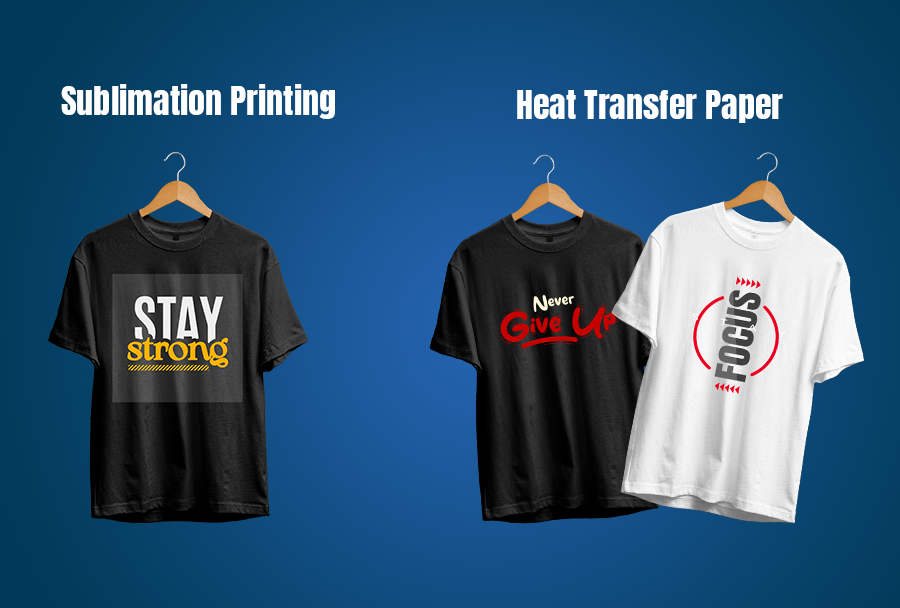
Difference between heat transfer and sublimation
Category | Sublimation Printing | Heat Transfer Printing |
How It Works | Ink turns into gas and infuses into the fabric | Design is pressed on top of the fabric |
Feel of the Print | Soft; no raised layer | It can feel like a layer on the fabric |
Durability | Very durable; no cracking, peeling, or fading | Less durable; may crack, peel, or fade over time |
Best Fabric Type | Light-colored polyester | Works on cotton, polyester, blends, dark or light fabrics |
Color Limitations | Only works well on light/white surfaces | Works on light and dark fabrics |
Material Compatibility | Polyester garments & poly-coated items (mugs, tumblers, keychains) | Wide range: fabrics, vinyl, films, mugs, etc. |
Start-up Cost | Higher — needs sublimation printer & special inks | Lower — can use regular inkjet/laser printer |
Equipment Needed | Sublimation printer, sublimation ink, heat press | Inkjet/laser printer + heat press or iron |
Print Quality | Bright, vibrant, long-lasting | Good but less vibrant; durability varies |
Ideal For | Sportswear, mugs, tumblers, puzzles, full-colour designs | DIY projects, cotton shirts, tote bags, small business printing |
Main Limitation | Cannot print on dark colours or cotton | Durability is lower compared to sublimation |
What Is DTF Printing Best For?
DTF (Direct-to-Film) printing is one of the most versatile printing methods today. It involves printing a design onto a special PET film, applying powder adhesive, curing it, and then transferring the design onto fabric using heat.
DTF printing is best for:
- Cotton, polyester, blends, and almost all fabric types
- Dark-colored and light-colored garments
- Highly detailed, full-colour designs
- Stretchy materials like leggings and sportswear
- Small and large orders (because transfers can be printed in bulk)
- Businesses offering customised apparel
DTF prints are durable, flexible, and soft, making them a great all-around option for people who want to print on multiple fabrics without limitations.
What Is Sublimation Printing Best For?
Sublimation printing infuses ink directly into polyester fibres or polymer-coated surfaces through heat and pressure. The result is a vibrant, smooth, and long-lasting print.
Sublimation printing is best for:
- 100% polyester or high-polyester blend fabrics
- Light-colored garments (especially white)
- Hard goods with polymer coating, like mugs, tumblers, keychains, and coasters
- Photo-quality, full-colour designs
- Sportswear and activewear
- Products needing extreme durability
Sublimation prints never crack or peel because the ink becomes part of the material itself.
DTF printing vs. sublimation: Which one will you choose?
Choosing between DTF printing and sublimation really comes down to what you want to create and the materials you plan to work with. Both methods offer excellent results, but they shine in different ways.
Choose DTF Printing If You Want:
- The ability to print on any fabric — cotton, polyester, blends, spandex, fleece, and more
- To create designs on dark or light garments
- A printing method that handles fine details beautifully
- A soft, flexible print that still sits on top of the fabric
- A versatile solution for custom apparel like hoodies, t-shirts, joggers, caps, and kids’ clothing
- To produce bulk transfers easily and store them for future use
DTF is the more flexible choice for apparel businesses or creators who work with a wide range of garments and colours.
Choose Sublimation If You Want:
- Prints that are ultra-vibrant, smooth, and permanent
- A design that becomes part of the fabric with no raised texture
- To print on light-colored polyester garments
- To create products like mugs, tumblers, puzzles, keychains, photo panels, and other poly-coated items
- A method that offers photo-quality results and exceptional durability
- A finish that never cracks, peels, or fades
Sublimation is the perfect choice for those who want premium-quality merchandise or work primarily with polyester-based products.
Final Thoughts
Choosing between sublimation, heat transfer, and DTF printing doesn’t have to be complicated. Each method has its own strengths, limitations, and ideal uses. The best choice depends on what you want to create, what materials you’re working with, and the quality you expect from the final product. Sublimation is unbeatable for vibrant, long-lasting prints on light polyester fabrics and poly-coated items.
Heat transfer is affordable, easy to start with, and perfect for DIY projects or printing on cotton garments. DTF printing offers unmatched versatility, working on almost any fabric—light or dark—while maintaining excellent durability.
Whether you’re running a small business, launching a clothing brand, or creating custom gifts, choosing the right printing method will help you achieve the best results. Think about your fabric, your budget, and the final look you want—and the right choice will become clear.
Frequently Asked Questions (FAQ)
Not necessarily. Sublimation gives more durable and vibrant results, but it only works on light-coloured polyester. Heat transfer is more flexible and works on cotton and dark fabrics, but durability may be lower.
No. Sublimation does not bond with cotton fibres. It requires polyester or a poly-coated surface.
Both are highly durable, but sublimation lasts the longest because the ink becomes part of the fabric. DTF is also very strong and flexible but sits on top of the fabric.
Sublimation does not work well on dark shirts. For dark fabrics, DTF or heat transfer vinyl (HTV) is a better choice.
DTF requires a printer, powder shaker, curing unit, and heat press—so the setup cost is higher than heat transfer. However, it offers the most flexibility for apparel printing businesses.
- For general apparel: DTF
- For polyester sportswear: Sublimation
For low-budget beginners or crafters: Heat Transfer Paper / HTV
Sublimation gives the softest feel because the ink becomes part of the fabric, leaving no texture at all.
Yes! Heat transfer paper works with standard inkjet or laser printers (depending on the paper type).