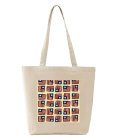
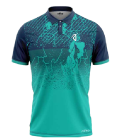
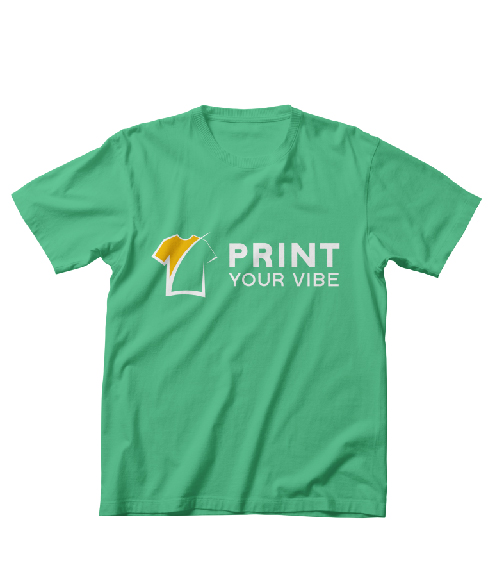
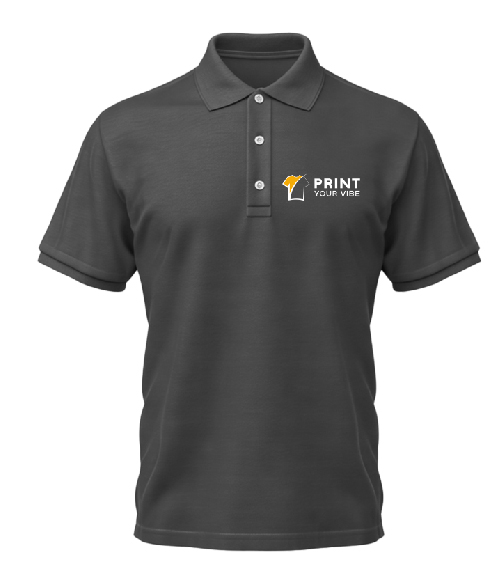
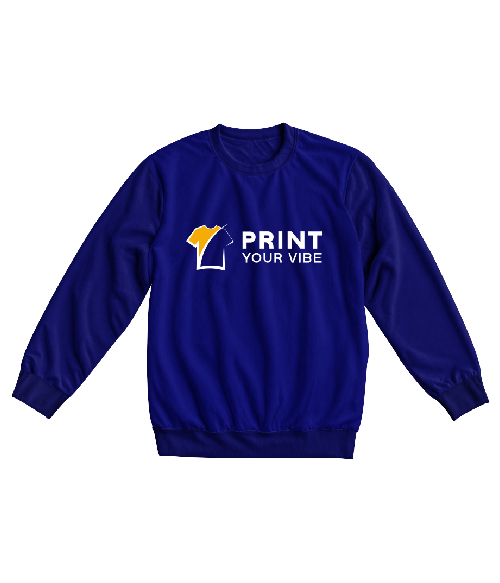
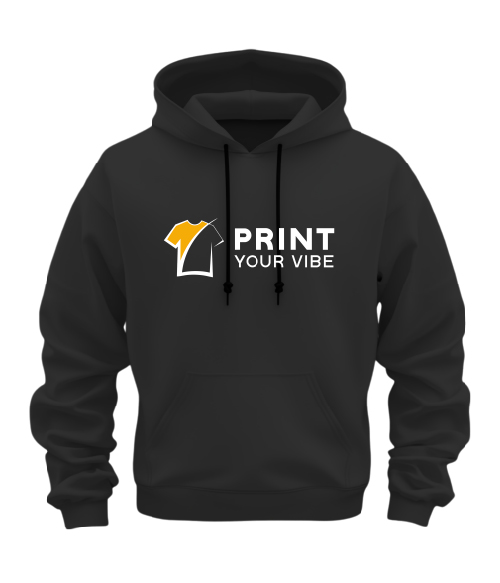







Looking for a t shirt with print uk customers actually want to wear? Whether you need one personalised tee for a birthday, fifty matching shirts for a 5K team, or five hundred branded polos for a corporate rollout, the UK print market has more options — and more ways to get it wrong — than most buyers realise.
This guide breaks down everything: printing methods, fabrics, pricing, turnaround times, and how to brief a printer so the finished product matches what's in your head. It's written for individuals, small businesses, schools, sports clubs, and brand managers across the UK who want printed t shirts uk suppliers can actually deliver on time and to spec.
By the end, you'll know exactly which printing technique suits your design, what a fair UK price looks like in 2026, and how to avoid the most common mistakes people make when ordering custom printed t shirts.
What Is a Printed T-Shirt?
A printed t-shirt is a garment — usually cotton, polyester, or a blend — onto which a design, logo, slogan, or image has been applied using a dedicated printing or decoration process, rather than being woven into the fabric itself.
The term covers a wide range of techniques, from a hobbyist heat-pressing a single design at home to an industrial screen-printing press running thousands of identical garments an hour. What separates a professional t shirt printing uk service from a DIY job is consistency: the same colour, placement, and durability across every single unit in an order.
Modern print-on-tee work generally falls into two categories:
- Direct printing — ink is applied straight onto the fabric (screen printing, DTG).
- Transfer printing — a design is printed onto a film or paper, then heat-pressed onto the garment (DTF, vinyl).
There's also embroidery, which isn't printing at all — it's thread stitched into the fabric — but it's usually grouped alongside printing services because customers shopping for custom clothing uk often want both options compared side by side.
Understanding which category a supplier is using matters more than most buyers expect, because it directly affects cost, durability, and how the finished garment feels and looks. Whether you're after everyday printed t shirts for casual wear or a fast turnaround, most UK suppliers — including same day t shirt printing options for urgent orders — can accommodate both.
Benefits of Custom Printed T-Shirts
Printed tees aren't just promotional throwaways — for many UK businesses and individuals, they're a working marketing tool, a uniform, or a keepsake. Here's why demand keeps growing.

1. Brand visibility that moves with people
A t-shirt is a mobile advert. Staff wearing branded workwear, event volunteers in matching tees, or a small business owner in a logo polo all extend brand reach into spaces paid ads can't reach — the local high street, the school gate, the gym.
2. Genuinely low cost per impression
Compared with digital ad spend or printed flyers, a well-made t-shirt gets worn repeatedly, often for years. Promotional apparel tends to be kept and used far longer than most other advertising formats, which pushes the effective cost-per-view down dramatically over time.
3. Team identity and cohesion
Matching kit — for a five-a-side team, a hen do, a school trip, or a startup's first ten employees — builds a visible sense of belonging that's hard to replicate any other way.
4. Professional workwear compliance
Many trades (construction, hospitality, catering, healthcare) need branded or hi-vis workwear for both professionalism and site safety requirements. Custom workwear printing lets businesses meet these needs without buying off-the-shelf uniforms that don't reflect the brand.
5. Personalisation for gifts and events
Personalised tees for birthdays, stag/hen parties, family reunions, and memorial events have become a UK staple — a way to mark an occasion that a card or generic gift can't match.
6. Scalable for any order size
From a single personalised t shirts uk order to a 1,000-unit corporate run, printing technology today scales in a way that older methods (like all-over hand printing) never could.
Popular Printing Methods
Choosing the right technique is the single biggest factor in how your finished t-shirt looks, feels, and lasts. Here's a breakdown of the five methods UK printers use most.
DTF (Direct-to-Film)

DTF printing prints your design onto a special film using pigment ink, coats it with adhesive powder, then heat-presses it onto the garment.
- Best for: small to medium runs, multi-colour and photographic designs, mixed fabric orders
- Feel: slight texture, flexible, doesn't crack easily
- Durability: very good — withstands 50+ washes when properly cured
- Turnaround: fast, works well for custom t shirt printing needed on tight deadlines
- Limitation: less cost-effective than screen printing at very high volumes (500+)
DTF has become the default choice for many UK printers because it works on cotton, polyester, and blends without the fabric-specific limitations older methods had.
DTG (Direct-to-Garment)
DTG is essentially inkjet printing straight onto the t-shirt fabric, ideal for detailed, full-colour, photographic artwork.
- Best for: single items, small batches, complex gradients and photo-quality prints
- Feel: soft — ink is absorbed into the fibres rather than sitting on top
- Durability: good on 100% cotton; weaker on polyester blends
- Turnaround: quick for one-offs
- Limitation: less vibrant on dark garments and less durable than DTF or screen print for heavy rewashing
Screen Printing
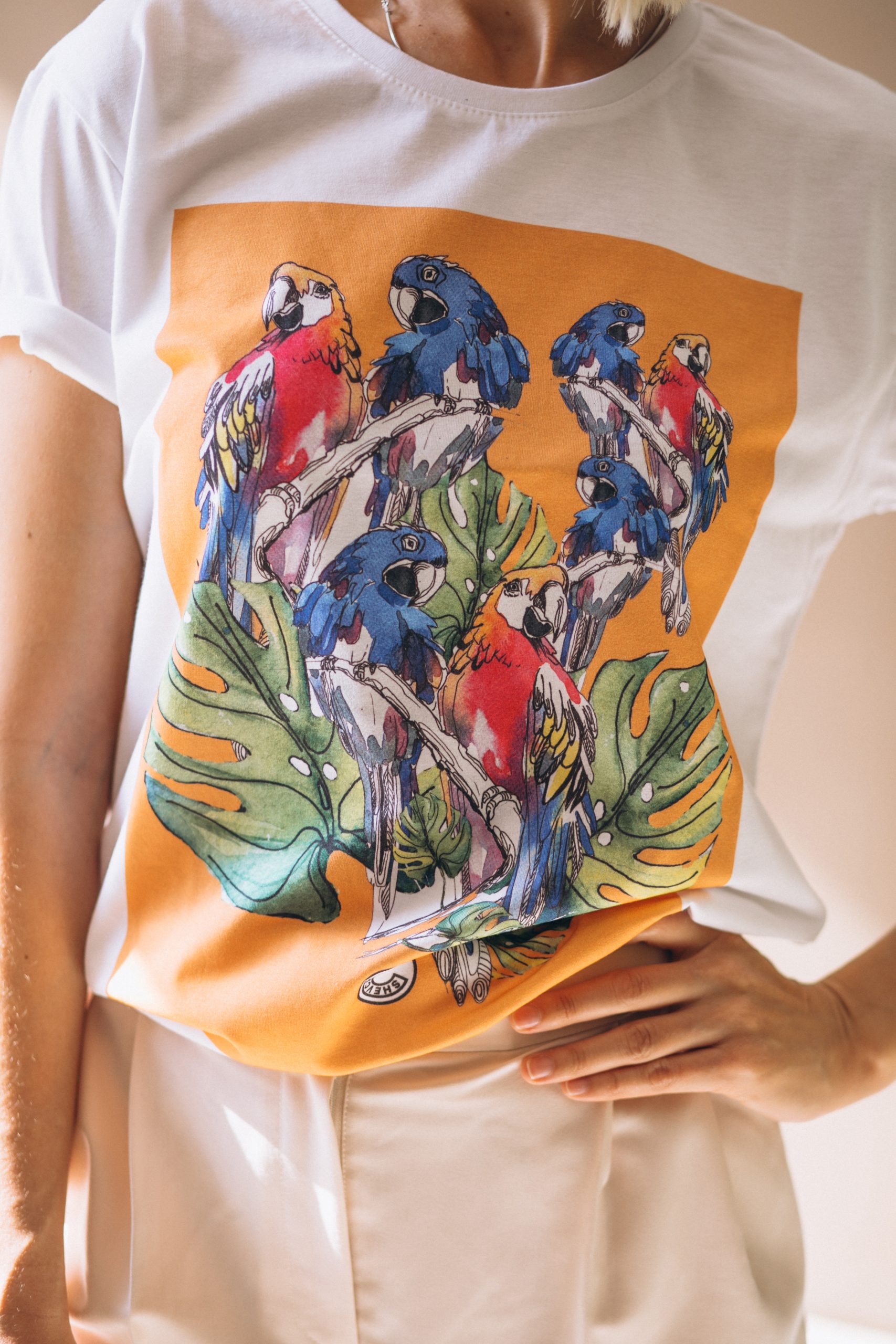
The traditional method: a stencil (screen) is created for each colour, and ink is pushed through the mesh onto the garment. Screen printing remains a UK favourite for its durability and colour accuracy.
- Best for: bulk orders with 1–4 colours, exactly matched Pantone brand colours
- Feel: can sit slightly raised on the fabric (or feel soft with water-based inks)
- Durability: excellent — the industry benchmark for long-term wash durability
- Turnaround: slower setup (screens must be burned per colour), but very fast once running
- Limitation: not cost-effective for small orders or highly detailed, multi-colour photographic designs
Screen printing remains the go-to for bulk t shirt printing because unit cost drops sharply as quantity increases, and screen printed t shirts hold their colour reliably wash after wash.
Vinyl (HTV — Heat Transfer Vinyl)
Vinyl printing cuts a design out of coloured vinyl sheet, then heat-presses it onto the garment — commonly used for names, numbers, and simple bold graphics.
- Best for: sports shirt numbering, single-colour text, small personalisation runs
- Feel: slightly thicker, glossy or matte finish
- Durability: strong, though can crack over very long-term heavy wear if lower-grade vinyl is used
- Turnaround: fast for simple designs
- Limitation: not practical for photographic or gradient designs
Embroidery
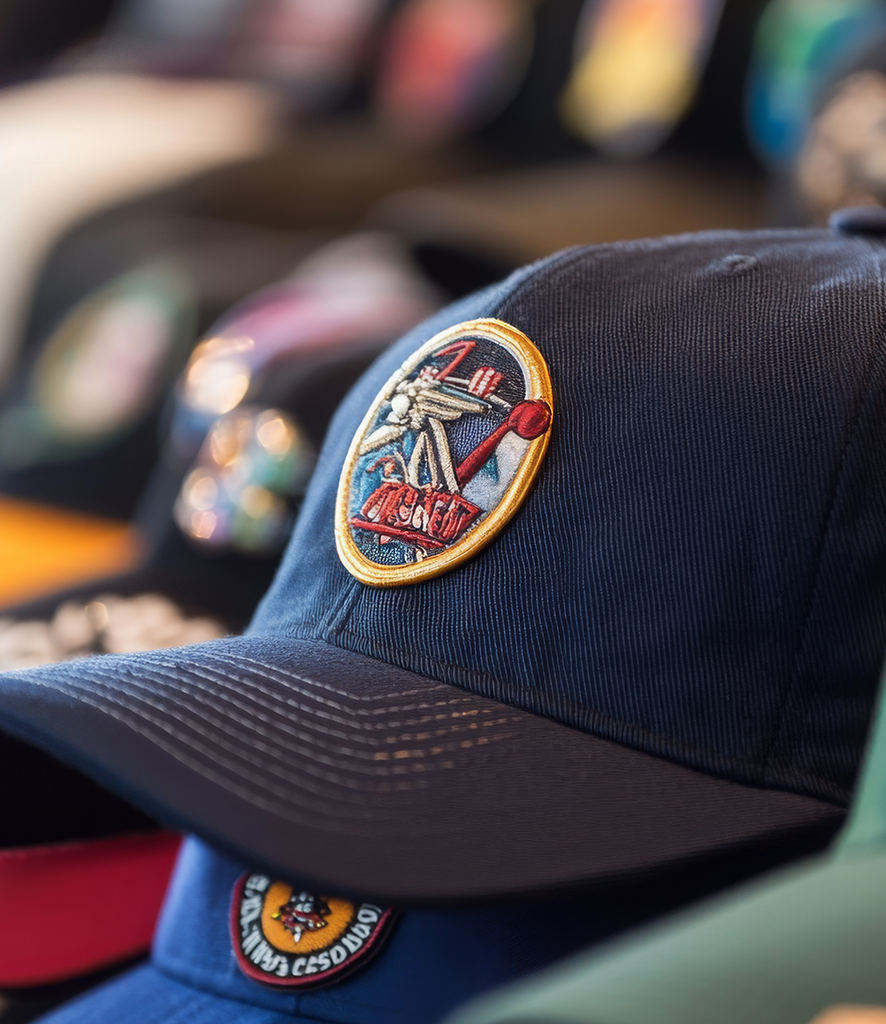
Not a print method at all — thread is stitched directly into the fabric using a computerised embroidery machine. Embroidery is especially popular for caps, polos, and premium branded workwear.
- Best for: polos, workwear, caps, jackets, logos that need a premium finish
- Feel: raised, textured, tactile
- Durability: the most durable decoration method available — often outlasts the garment itself
- Turnaround: depends on stitch count and design complexity
- Limitation: not suitable for photographic detail or large all-over designs; higher cost per unit for large logos
DTF vs Screen Printing: Which Wins for You?
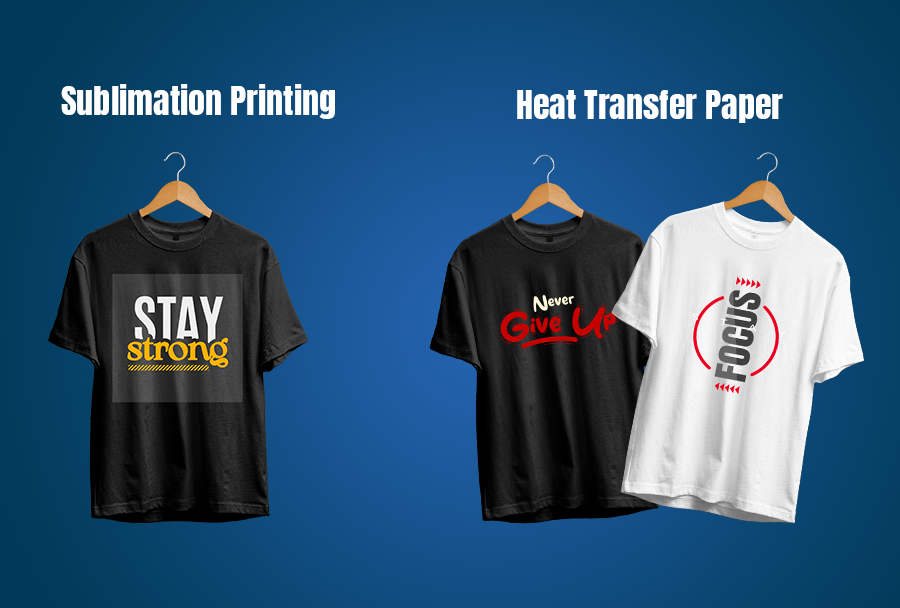
These two methods cover most UK orders between them, so it's worth a direct comparison. Direct to film printing wins when you need full-colour, detailed designs on a small or mixed-fabric order, with no real minimum quantity. Screen printing wins when you're printing 20+ units with 1–4 solid colours, where the unit cost drops well below DTF pricing. If you're unsure which applies to your order, the safest rule is: detailed design and low quantity → DTF; simple design and higher quantity → screen printing.
Comparison Table: Which Printing Method Should You Choose?
| Method | Best For | Durability | Cost — Low Volume | Cost — High Volume | Feel |
|---|---|---|---|---|---|
| DTF | Detailed designs, mixed fabrics, small–medium runs | Very good | Low–medium | Medium | Slight texture |
| DTG | Photo-quality, single items | Good (cotton) | Medium | High | Soft |
| Screen Printing | Bulk orders, brand colours | Excellent | High | Very low | Soft to slightly raised |
| Vinyl | Names, numbers, simple graphics | Good–excellent | Low | Medium | Glossy/matte, thicker |
| Embroidery | Polos, workwear, caps, premium logos | Outstanding | Medium–high | Medium | Raised, stitched texture |
Choosing the Right Fabric
The printing method only tells half the story — fabric choice affects comfort, print quality, and how the garment ages.
100% Cotton
- Breathable, soft, natural fibre
- Excellent for DTG and screen printing (ink absorbs well)
- Shrinks slightly on first wash if not pre-shrunk
- Best for: everyday wear, casual branded tees, personalised gifts
Cotton/Polyester Blend (50/50 or 60/40)
- More durable and less prone to shrinking than 100% cotton
- Holds shape better over repeated washing
- Best for: workwear, event t-shirts, high-frequency use
100% Polyester (Performance Fabric)
- Moisture-wicking, quick-drying
- Ideal for sportswear and active use
- Requires DTF or sublimation rather than standard DTG (dye migration risk with DTG on polyester)
- Best for: sports teams, gym wear, outdoor events
Organic and Sustainable Cotton
- Grown without synthetic pesticides, often certified (GOTS)
- Increasingly requested by brands prioritising sustainability credentials
- Slightly higher cost, growing demand among UK eco-conscious buyers
Heavyweight vs Lightweight
| Weight (GSM) | Feel | Best Use |
|---|---|---|
| 140–160 GSM | Light, summer-weight | Events, festivals, giveaways |
| 180–200 GSM | Standard mid-weight | Everyday business/casual tees |
| 220+ GSM | Heavy, structured | Premium branded merchandise, workwear |
How to Design the Perfect Printed T-Shirt
A great design brief saves time, money, and reprint headaches. Here's a step-by-step approach.
- Define the purpose first. A t-shirt for a one-off hen party has different priorities (fun, cheap, fast) than a corporate uniform (brand consistency, durability, professional finish).
- Choose your colour count wisely. Screen printing charges per colour, so a 4-colour design costs more to set up than a 1-colour design. DTF and DTG don't have this limitation — colour count doesn't significantly affect price.
- Consider placement. Standard placements include full front/back, left chest (classic for branded workwear), sleeve print, and pocket-size print.
- Get the file format right. Vector files (AI, EPS, SVG) scale perfectly for logos and text. High-resolution PNG or PSD (300 DPI minimum) works for photographic designs. Low-resolution images pulled from websites or social media will print blurry.
- Check contrast and legibility. Text under 10mm high can become unreadable once printed, especially with embroidery. Bold, simple typography reads better at a distance.
- Request a digital proof. Any reputable custom t shirt printing service should send a visual proof before production. Never approve a bulk order without seeing exact placement, size, and colour on a template first.
- Order a sample for large runs. For orders above 50 units, requesting one physical sample garment before full production catches fabric, colour, or fit issues before they multiply across the whole order.
Pricing Guide
Pricing for a t shirt with print uk service depends on four main factors: printing method, quantity, number of colours/design complexity, and garment quality.
Print Your Vibe Pricing (per unit, including garment + print)
| Method | 1–10 Shirts | 10–50 Shirts | 50–100 Shirts | 100+ Shirts |
|---|---|---|---|---|
| DTF | £12–£18 | £9–£13 | £7–£10 | £5–£8 |
| DTG | £14–£20 | £10–£15 | £8–£12 | £7–£10 |
| Screen Printing | £18–£25 | £9–£13 | £6–£9 | £4–£6 |
| Vinyl | £10–£15 | £8–£12 | £7–£10 | £6–£8 |
| Embroidery | £15–£22 | £11–£16 | £9–£13 | £8–£11 |
Prices vary by garment brand, design size, number of print locations, and specific artwork. Always request a formal quote for an accurate figure.
What affects your final price
- Garment brand and quality — budget tees vs premium brands like AWDis or SOL'S
- Number of print locations (front only vs front + back)
- Number of colours (screen printing only)
- Design size — a full A3 back print costs more than a small chest logo
- Rush/same-day service fees
- Delivery method and location
Same Day T-Shirt Printing UK
Sometimes there isn't time for a full production schedule — a last-minute event, a same-week sports fixture, or a surprise gift.
What's realistically achievable same-day:
- Single or small-quantity DTF or vinyl prints
- Simple 1–2 colour designs
- Standard placements (front or back only)
- Orders placed early in the day, collected or shipped same evening
What typically can't be done same-day:
- Large bulk orders (100+ units)
- Complex multi-colour screen printing (screens need setup time)
- Embroidery with high stitch counts
- Custom garment sourcing outside standard stock
How to guarantee same-day success:
- Contact the printer directly to confirm same-day capacity before ordering
- Have your artwork print-ready (correct format, resolution) before you arrive or upload
- Choose DTF or vinyl over screen printing or embroidery for speed
- Confirm collection time and location in advance
Same-day services are usually priced at a premium versus standard 3–7 day turnaround, since they're prioritised ahead of the regular production queue.
Bulk Printing for Businesses
Bulk t shirt printing is where per-unit cost drops fastest — and where a good supplier relationship matters most.
Why businesses choose bulk printing
- Lower cost per garment as volume increases
- Consistent branding across large teams or events
- Simplifies staff uniform management
- Supports large-scale event or promotional campaigns
What to check before placing a bulk order
| Checklist Item | Why It Matters |
|---|---|
| Minimum order quantity (MOQ) | Some methods (screen printing) have MOQs to be cost-effective |
| Size run availability | Confirm XS–5XL or specific size breakdowns are in stock |
| Lead time | Bulk orders take longer — plan 1–3 weeks ahead of your deadline |
| Sample approval | Always request a sample before full production |
| Reprint/defect policy | Ask what happens if garments arrive faulty or mis-sized |
| Storage/re-order options | Useful for businesses ordering staff uniforms regularly |
Business use cases
- Corporate uniforms and staff branding
- Event and conference merchandise
- Sports club and school kit
- Promotional giveaways and trade show apparel
- Retail and e-commerce private-label clothing
For business t shirt printing, working with a supplier who understands brand guideline consistency (Pantone matching, logo placement rules, approved fonts) prevents inconsistent output across repeat orders — something that matters more the larger and more regular the order becomes.
Personalised Printed T-Shirts
Not every order is for a business — a huge share of UK demand is personal: birthdays, hen and stag dos, family holidays, sports days, memorial tribute shirts, and one-off gifts. For last-minute occasions, personalised t shirts can often be turned around the same day.
Popular personalisation options:
- Custom names and numbers
- Photo prints (DTG or DTF for best photo quality)
- Slogans, in-jokes, and custom text
- Matching sets for groups (families, wedding parties, teams)
- Date and location prints for events
Tips for personal orders:
- Order one extra — sizes get mixed up in group orders more often than people expect
- Confirm sizing charts — UK sizing can vary between garment brands, so check before ordering multiples
- Photo quality matters — for photo tees, use the highest resolution image available
- Plan ahead for events — even fast turnaround services need a few days' buffer around weekends and bank holidays
Popular personal occasions for printed tees in the UK:
- Hen and stag parties
- Birthday milestones (18th, 21st, 30th, 40th, etc.)
- School leavers' shirts
- Charity fun runs and sponsored events
- Family reunions and holidays
- Memorial and tribute shirts
Why Choose Print Your Vibe
Print Your Vibe is a UK-based custom garment printing and embroidery business serving Stratford, Poplar, and East London, with UK-wide delivery available.
What sets the service apart:
- Multiple printing methods under one roof — DTF, DTG, screen printing, vinyl, and embroidered workwear, so the recommendation is based on what suits the job, not just what one machine can do
- Trade-quality garment brands — including AWDis and SOL'S ranges, chosen for consistent sizing and durability
- Support for both bulk and single-item orders — from a one-off personalised gift to full business uniform rollouts
- Local East London base with a straightforward ordering process for businesses, schools, and event organisers across Stratford, Poplar, and Central London
- Direct, responsive communication — enquiries handled directly rather than through an automated quote system with no human contact
Whether the brief is a five-shirt hen party order or a two-hundred-unit staff uniform rollout, the process starts with understanding the end use of the garment — because that's what actually determines the right printing method, fabric, and price point, not just the design file itself.
Frequently Asked Questions
How much does it cost to print a t-shirt in the UK?
Prices typically range from £9–£20 per unit for small orders and drop to £4–£7 per unit for bulk orders of 250+, depending on the printing method, garment quality, and design complexity.
What is the best printing method for a small business logo?
For small to medium orders with a full-colour logo, DTF is usually the best balance of cost, durability, and print quality. For simple 1–2 colour logos in bulk, screen printing is more cost-effective.
Can I get a single custom printed t-shirt made?
Yes. DTF, DTG, and vinyl printing are all well suited to single-item orders. Screen printing can also be done at low volume, though it becomes more cost-effective from around 20–25 units upward once the setup cost is spread across more garments.
How long does custom t-shirt printing take in the UK?
Standard turnaround is typically 3–7 working days. Same-day and next-day services are available for simpler designs and smaller quantities, subject to supplier capacity.
What's the difference between DTF and DTG printing?
DTF prints onto a film that's then heat-pressed onto the garment, working on almost any fabric type. DTG prints ink directly into the fabric fibres, giving a softer feel but working best on 100% cotton.
Is screen printing better than digital printing?
Neither is universally "better" — screen printing wins on cost and durability for bulk, simple-colour designs; digital methods (DTF/DTG) win on detail, colour range, and small-order flexibility.
How many washes will a printed t-shirt last?
With proper curing and correct washing (inside out, cool wash, no tumble drying on high heat), most professional prints last 50+ washes without significant cracking or fading.
Can you print on polyester sports shirts?
Yes — DTF and sublimation printing work well on polyester. DTG is not recommended on 100% polyester due to dye migration, which can cause pink or discoloured haloing around the print.
What file format do I need for custom printing?
Vector formats (AI, EPS, SVG) are ideal for logos and text. For photographic designs, a high-resolution PNG or PSD file (minimum 300 DPI) is required for a sharp result.
Do you offer bulk discounts for business orders?
Yes, most UK printers — including Print Your Vibe — offer tiered pricing where the per-unit cost decreases as order quantity increases.
What's the minimum order quantity for custom t-shirts?
This depends on the method: DTF, DTG, and vinyl typically have no minimum or a very low one (1 unit). Screen printing has no strict minimum either, but the price per unit drops sharply from around 20–25+ units, which is where it usually becomes the most cost-effective choice.
Can I supply my own t-shirts for printing?
Many printers accept customer-supplied garments, though it's worth checking in advance, as fabric type affects which printing method can be used and some suppliers only work with stock they've quality-checked themselves.
Key Takeaways
- DTF and DTG suit small orders and detailed, multi-colour designs; screen printing wins on cost for bulk, simple-colour runs; embroidery is the most durable option for workwear and polos.
- Fabric choice matters as much as printing method — cotton, blends, and polyester each behave differently with different print techniques.
- UK pricing ranges roughly from £4 (bulk) to £20 (single item) per unit, depending on method, quantity, and design complexity.
- Same-day printing is achievable for simple, small-quantity DTF or vinyl orders, but not for bulk or embroidery work.
- Always request a digital proof — and a physical sample for large orders — before full production begins.
- Print Your Vibe offers all major printing methods under one service, based in East London and serving businesses, schools, teams, and individuals across the UK.
Ready to Order Your Custom Printed T-Shirts?
Get a free, no-obligation quote for your t shirt with print uk project — whether it's a single personalised gift or a full business uniform rollout.
270 Teviot Street, London E14 6QS