
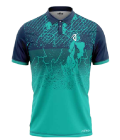



The best T-shirt printing method depends on your design, quantity and fabric. DTF printing is the most flexible choice for small orders and full-colour designs on almost any fabric. DTG printing gives the softest feel for detailed or photographic designs on cotton T-shirts. Screen printing is usually the best value for larger orders of one design with a few solid colours.
This guide explains the main types of T-shirt printing, how each one works and when to use it, so you can choose the right method before you order.
DTG vs DTF vs Screen Printing at a Glance
| Factor | DTG | DTF | Screen printing |
|---|---|---|---|
| How it works | Ink printed straight into the fabric | Design printed on film, then heat-pressed | Ink pushed through a stencil, one colour at a time |
| Best order size | 1 to small runs | 1 to medium runs | Larger runs of one design |
| Colours and detail | Full colour, photos, gradients | Full colour, photos, gradients | Best with a few solid colours |
| Feel on the shirt | Very soft, part of the fabric | Smooth, slightly raised layer | Soft to slightly raised, depending on ink |
| Best fabrics | 100% cotton or high-cotton | Cotton, polyester and blends | Cotton and most blends |
| Dark garments | Possible, needs a white base layer | Works well | Works well |
| Set-up | Little or none | Little or none | Screens needed for each colour |
| Ideal for | One-offs, gifts, detailed artwork | Small orders, mixed fabrics, urgent jobs | Events, merchandise, staff uniforms in bulk |
What Is DTG Printing?
DTG printing (direct-to-garment) works like an inkjet printer for clothing. Water-based ink is sprayed directly onto the T-shirt and soaks into the fibres, so the print feels soft and becomes part of the fabric.
DTG is excellent for photographs, gradients and artwork with lots of colours, because there are no screens to make and no limit on colours. It works best on 100% cotton or high-cotton T-shirts. On dark shirts, a white base layer is printed first so the colours stay bright.
Best for: one-off T-shirts, personalised gifts, small runs of detailed artwork and print-on-demand designs.
Less suited to: polyester sportswear and large orders of a simple design, where screen printing is usually better value.
What Is DTF Printing?
DTF printing (direct-to-film) prints your design onto a special film. An adhesive powder is applied and cured, and the film is then heat-pressed onto the T-shirt. When the film is peeled away, the design stays on the fabric.
The big advantage of DTF is flexibility. It works on cotton, polyester and blends, in light and dark colours, and it reproduces full-colour designs with sharp detail. Because the design is made on film first, it is also well suited to quick turnarounds and mixed orders, such as different designs or names on each shirt.
Best for: small and medium orders, full-colour logos, polyester and blended T-shirts, sportswear and urgent jobs.
Less suited to: very large single-design runs, where screen printing usually costs less per shirt. DTF also sits as a thin layer on the fabric, so it feels slightly different from a soaked-in DTG print.
What Is Screen Printing?
Screen printing uses a mesh screen with a stencil of your design. Ink is pushed through the screen onto the T-shirt, with one screen for each colour.
Setting up the screens takes time, but once they are ready, each extra T-shirt is fast and economical to print. Screen printing produces bold, vibrant colours with excellent coverage, which is why it is the traditional choice for band merchandise, events and branded clothing in bulk.
Best for: larger orders of the same design, bold logos with a few solid colours, and merchandise or uniforms where cost per shirt matters.
Less suited to: one-offs, photographs, gradients, and orders where every shirt is different.
Which Printing Method Should You Choose?
Use these questions to narrow it down:
- How many T-shirts do you need? For one or a handful, choose DTG or DTF. For a large run of one design, screen printing is usually the best value.
- How many colours are in your design? Photos and gradients suit DTG or DTF. A logo with one to three solid colours suits screen printing.
- What fabric is the T-shirt? Cotton works with all three. Polyester and blends are usually best with DTF.
- Is every shirt different? Names, numbers or several designs are easiest with DTF or DTG.
- How soon do you need them? DTF and DTG need little or no set-up, so they are often quicker for small urgent orders.
Quick recommendations
| You need | Best method |
|---|---|
| A single personalised T-shirt | DTG or DTF |
| A photo or detailed artwork on cotton | DTG |
| A full-colour logo on polyester or sportswear | DTF |
| Different names on each shirt | DTF |
| 100 event T-shirts with a two-colour logo | Screen printing |
| Bulk staff T-shirts with one simple logo | Screen printing |
How Long Do DTG, DTF and Screen Prints Last?
All three can last well when they are printed correctly and cared for properly. Screen printing is known for its durability, because the thick layer of ink bonds firmly with the fabric. DTF prints are flexible and hold up well to regular washing. DTG prints can soften slightly over time, especially on dark shirts, but good-quality DTG on cotton stays vibrant with gentle washing.
To make any printed T-shirt last longer:
- Turn it inside out before washing.
- Wash cool with similar colours.
- Avoid bleach and fabric softener.
- Air-dry or tumble-dry on low if the label allows.
- Never iron directly over the print.
How Much Does Each Method Cost?
There is no fixed price, but each method follows a clear pattern:
- DTG: little set-up, so it is cost-effective for small quantities. The cost per shirt stays fairly similar as the order grows.
- DTF: also little set-up, and good value for small to medium orders, especially full-colour designs.
- Screen printing: set-up costs for each screen make small runs expensive, but the cost per shirt drops as quantities increase.
For the most accurate comparison, ask for quotes on the same T-shirt, design and quantity.
Print Your Custom T-Shirts with Print Your Vibe
Print Your Vibe offers DTG, DTF and screen printing from our East London print shop in E14, so we can recommend the method that suits your design, fabric and quantity rather than relying on one approach for every order. There is no minimum order, so you can print a single T-shirt or a full run for your business, team or event.
Not sure which method is right for you? Contact our team with your design and quantity, and we'll recommend the best option when we quote.
Frequently Asked Questions
What are the main types of T-shirt printing?
The most common types are DTG (direct-to-garment), DTF (direct-to-film) and screen printing. Vinyl heat transfer, embroidery and sublimation are also used for specific jobs.
Which is better, DTG or DTF?
DTG gives a softer, more natural feel on cotton T-shirts. DTF is more versatile because it works on cotton, polyester and blends. For detailed prints on cotton, choose DTG. For mixed fabrics or sportswear, choose DTF.
Is screen printing better than DTF?
Screen printing is usually better value for large orders of one design with a few colours. DTF is better for small orders, full-colour designs and polyester garments.
Which T-shirt printing method lasts the longest?
Screen printing is generally the most durable, followed closely by DTF. Good-quality DTG also lasts well on cotton with careful washing.
What is the cheapest way to print T-shirts?
For a few T-shirts, DTF or DTG is usually cheapest because there are no screens to set up. For large orders of one simple design, screen printing usually has the lowest cost per shirt.
Can you print photos on T-shirts?
Yes. DTG and DTF both reproduce photographs and gradients well. Screen printing is not suited to photographic detail.
Which printing method is best for polyester T-shirts?
DTF is usually the best choice for polyester and sportswear, because it bonds well with synthetic fabrics. DTG works best on cotton.
Conclusion
There is no single best T-shirt printing method. Choose DTG for soft, detailed prints on cotton, DTF for flexible full-colour printing on almost any fabric, and screen printing for bold designs in larger quantities. Matching the method to your design, fabric and order size gives you the best result for your budget.
Not sure which method to choose?
Send us your design and quantity. We will recommend DTG, DTF or screen printing and confirm your quote.